

- Joined
- Jul 11, 2008
- Messages
- 3,018
- Reaction score
- 198
- Points
- 63
For: new bettors who want to spot the common psychological traps early and build calm habits that protect bankroll while they learn.
Why your mind matters more than your picks
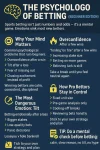
Most beginners assume the hard part is “finding winners”. In reality, the hard part is behaving the same way when you are up, down, bored, excited, or convinced the next one “has to land”. Your picks can be fine, but if emotion changes your stake size, your timing, or the number of bets you place, you quietly turn an okay strategy into a losing one.This is why good bettors do not try to become robots. They still feel frustration, confidence, and impatience like everyone else. The difference is they do not let those feelings decide what they bet or how much they bet. They build routines that make it harder to do something stupid in a heated moment.
Tilt - the fastest way to wreck a bankroll
Tilt is not always rage. It is any emotional state where the goal shifts from making a good decision to repairing a feeling. Sometimes that feeling is anger (“That was a joke”), sometimes it is urgency (“I need to get back to even”), and sometimes it is pride (“No way I end the day down”).Tilt has a pattern. You start looking for speed over quality, you accept worse prices, you force bets you would normally pass, and you justify it with sentences that sound reasonable in the moment. The swear word is not the emotion, it is the rush.
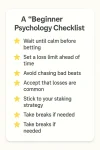
The fix is not a motivational quote. It is a stop rule. If you have just taken a loss and you feel the need to immediately place another bet, you do not need another bet, you need a break. Stand up, get away from the screen, and come back only when you can explain your next bet calmly and in plain language. If you cannot do that without sounding defensive, you are not ready.
Overconfidence - the silent bankroll killer
Tilt is loud. Overconfidence is quiet, which is why it is dangerous. A small winning run can trick you into treating variance like skill and turning “I am running well” into “I have figured it out”. The usual symptoms are simple: you start increasing stakes because you feel sharp, you bet more matches because you trust your gut, and you stop respecting price because you assume you are right.The market loves this version of you, because you begin paying extra for certainty that does not exist. The cure is boring by design: fixed unit sizing, a clear maximum stake you do not break, and a habit of reviewing your bets as decisions, not as wins and losses. Streaks happen to everyone. Skill is how you behave in the middle of them.
FOMO - betting to feel involved
Fear of missing out is rarely about money. It is about identity. Everyone is talking about a match, odds are moving, a tipster is shouting “max bet”, and you feel like passing means you are not a real bettor. So you rush analysis, you borrow someone else’s confidence, and you end up placing a bet you cannot even explain properly.The rule that saves you is painfully simple: if you cannot explain why you like the bet without referencing hype, you do not have a bet, you have social pressure. A normal day of betting includes passes. Passing is not a lack of courage, it is a skill.
The thrill trap - confusing entertainment with strategy
A lot of beginner losses are not “mistakes” in their head. They are entertainment purchases dressed up as betting. You chase long odds because the payout looks fun, you add extra legs to a parlay because it feels exciting, you bet sports you barely watch because there is action on, and before you know it the session is about dopamine, not decisions.There is nothing wrong with enjoying betting, but you have to be honest about which bets are entertainment and which bets are part of your serious approach. If you mix them, the entertainment bets silently pull your whole bankroll into higher variance and worse discipline. Keep them separate in your mind and in your staking. If you are trying to win long term, your process has to value clarity over excitement.
Biases that quietly bend your judgment
Even if you stay calm, your brain still plays tricks. The most common ones show up as thoughts that feel logical but are not.Gambler’s fallacy makes you think a win is “due” or a team “cannot keep getting away with it”. Recency bias makes the last match you watched feel like the truth, not a sample. Confirmation bias makes you search for information that supports your pick and ignore the parts that argue against it. Sunk cost makes you chase because you are already down and you want to “make the day worth it”.
The practical cure is a short pause where you re-state the bet as a probability, not as a story. Ask yourself: “If I saw this price with no context and no emotions attached, would I still take it?” If the answer depends on your mood, step back.
How strong bettors actually control emotions
They do not rely on willpower. Willpower runs out. They build guardrails that make bad decisions harder to execute, especially when the brain wants quick relief.That usually means fixed unit size, limits on the number of bets per day, a rule for breaks after a loss, and a simple review habit that treats each bet as a decision you can learn from. The biggest advantage here is consistency. If your process stays steady, your results become easier to understand, and improvement becomes real instead of random.
A quick mental check before you click
Use this when you are about to place a bet and you want to be sure you are doing it for the right reasons.- Am I calm, or am I trying to change how I feel?
- Can I explain this bet in one sentence without hype words?
- Is my stake the same unit size I would use on a normal day?
- If I lose this, will I accept it as a normal outcome without chasing?
- Would I still place it if nobody online was talking about it?
Traps to watch for (the ones that repeat)
- Trying to “fix” a bad day with one more bet.
- Raising stakes because you feel hot, not because the price is better.
- Betting out of boredom, habit, or social pressure.
A good betting week is not the one where you win every day. It is the one where your decisions stay the same whether you are up or down.
Putting it together
Psychology matters because it decides whether you follow your own rules. When your head is clear, you stake sensibly, you pass when you should, and you give your good analysis a fair chance to work. When your head is not clear, you over-bet, chase, and sabotage your own edge.If you want one simple target as a beginner, make it this: protect your bankroll by avoiding emotional bets. Do that consistently and you are already ahead of most people, because most people are not losing to bad predictions, they are losing to bad decisions they made while emotional.
FAQ
Q1: How do I know I am tilted if I do not feel angry?A: If your stake size changes because you are down, rushed, or desperate to get even, that is tilt even if you feel calm on the surface.
Q2: Is confidence always a problem?
A: Confidence is fine until it changes your rules. The red flag is when confidence increases stake size or bet volume without a clear reason.
Q3: What is the fastest mental habit that improves results?
A: A stop rule after losses plus a quick pre-bet check. It blocks most of the damage beginners do to themselves.
Next in Intermediate Betting Series: Survive Losing Streaks
Previous: Beginner-Friendly Betting Strategies That Actually Work
Attachments
Last edited:

 Beginner Betting Guides - Reference Menu

