

- Joined
- Jul 11, 2008
- Messages
- 2,855
- Reaction score
- 198
- Points
- 63
For: beginners who want to understand in-play betting properly, avoid tilt and FOMO traps, and use a simple set of rules that protects bankroll.
What live betting actually is (and what it is not)
Live betting is simply placing a wager during the match, with odds moving in real time as goals, injuries, cards, substitutions and game state change. The key word is not “live”, it is “moving”. You are dealing with a market that is constantly updating its opinion every few seconds.The beginner mistake is assuming “live” automatically means “more edge”. Most of the time the market is adjusting rationally, because everyone watching can see the same things. You only gain an edge when the price moves too far compared to what truly changed. Live betting is not magic. It is the same betting problem, just faster, and the faster it gets, the more your brain wants to act even when the correct play is to do nothing.
Why live betting feels so tempting (and why that tempts you into mistakes)
In-play betting feels powerful because you are no longer imagining the match. You are watching it. You feel like you have better information because you can see energy, body language, mistakes, pressure, and tactical changes. Sometimes you do have better information, but you also have stronger emotion, and emotion is information too, just not the kind that helps your bankroll.The trap is that live betting turns impulses into “strategy” if you are not careful. A big missed chance makes you want to buy a goal. A goal against you makes you want to fix it. A few corners makes you feel like something is building. The clock creates urgency and urgency lowers standards. When you are not disciplined, you are not reacting to value, you are reacting to feelings.
The way to stay safe is to treat live betting like hunting for one good price, not like staying entertained for ninety minutes.
A beginner’s edge in-play is overreactions, not activity
Most good live bets come from one question that sounds simple but is surprisingly hard to apply in the moment:Did the price move more than the match actually changed?
A goal, a red card, or a short burst of pressure can swing the odds dramatically. Sometimes the swing is fair. Sometimes it overshoots because people over-weight the most recent event and under-weight the underlying match.
Think in plain terms. If a strong favourite concedes early but still controls territory, tempo, and chance quality, the new price might be too generous. If a match is being played at high pace with repeated dangerous entries but totals drift down because the score is still 0-0, the market may be reacting more to the scoreboard than the pattern. If a red card happens and the market prices the match as “over”, while the tactical shape and game state suggest the team with ten can still defend and counter, the swing can be too extreme.
Notice what all of these have in common. You are not trying to predict the next goal like a fortune teller. You are trying to judge whether the new price is an overreaction to a moment.
The first discipline rule: watch the match, not just the odds screen
If you are only watching the odds screen, you are betting blind. You are seeing the reaction, not the cause, and you are always late. Professional-level discipline starts with separating the game from the odds; using a dedicated resource for Live Football Scores allows you to track objective data-like corner counts, dangerous attacks, and official substitution times-without the bias of a sportsbook’s moving lines.When you watch the match, do not chase “momentum” as a vibe. Look for concrete changes you can describe clearly: a team’s press has died, a fullback is constantly getting overloaded, a midfielder is carrying a knock, the shape has changed, or a substitution has flipped a matchup. Good in-play betting is basically asking, “What changed, and does the price reflect it properly?”
If you cannot put what is happening on the pitch into one calm sentence, you should not be placing a live bet because you do not even know what you are betting on.
The second discipline rule: do not bet in the emotional window after goals
Right after a goal the market is chaotic. Prices jump, some lines disappear, cashout temptations appear, and your brain wants to respond. Beginners often pay the worst number in the entire sequence because they are chasing certainty during the most unstable few seconds.A simple default rule helps: do not bet immediately after a goal. Let the match restart, let the shape settle, let the price stabilize. Waiting does not make you “late”, it makes you less impulsive. If you missed a number by a few ticks, that is fine. The goal is not to catch every move, it is to avoid the rush decisions that slowly drain you.
Live stakes should be smaller than pre-match (because volatility is higher)
In-play betting has more unknowns in the next ten minutes than a pre-match price that has been shaped for days. One injury, one card, one tactical switch can flip your whole script. That is why live stakes should be smaller by default.This is not about fear, it is about matching risk to uncertainty. If your normal pre-match stake is 2 units, your live stake should usually be 1 unit or less. Heavier live staking is how beginners turn normal variance into panic, and panic is where bankroll damage happens.
If you only follow one rule from this guide, follow this one.
Keep live markets simple while you learn
Speed plus complexity is where beginners get trapped. If you are placing bets quickly on markets you do not fully understand, you cannot even review the decision later, because you will not know whether the bet lost because you were unlucky or because the market was poor. That slows learning and increases tilt.Simple markets are easier to judge in real time and easier to review afterward. “Next goal” style bets often feel simple, but they are emotionally loaded, because they invite chasing. If you use them at all, it should be because you can point to sustained territorial pressure and a tactical reason why the next phase heavily favors one side, not because you feel like a goal is due.
If you want to get good at live betting, your first job is to reduce the ways you can lie to yourself.
Selectivity is the real skill - you do not need a bet in every match
Live betting becomes profitable for some people because they are willing to watch long stretches without placing anything. That sounds obvious, but it is the part most beginners cannot do. They confuse “I watched” with “I should bet”.A healthier mindset is to treat in-play betting like waiting for mistakes. If the market is pricing the match correctly, you do nothing. If the market panics, overshoots, or ignores a real tactical shift, you consider a bet. The difference between a disciplined live bettor and a clicker is not intelligence, it is patience.
Track live bets separately so you can see your real leak
Live betting results often look very different from pre-match results. If you mix them, you cannot diagnose what is working and what is hurting you. Separate tracking gives you clean feedback: are you betting too often, are you chasing, are certain leagues or markets pushing you into impulsive decisions?Some people are fine live betting totals while watching calmly. Other people turn into gamblers the moment the live tab opens. Tracking does not judge you, it reveals you.
Stop rules - what keeps a rough day from turning into a habit
Because live betting is fast, you need automatic rules that kick in before you start bargaining with yourself. Otherwise you will always find a “reason” to keep going.Two simple stop rules cover most beginner damage: you stop after two straight live losses, and you set a hard cap on how many live bets you can place in a day. This is not a punishment. It is what prevents tilt from turning into a bankroll leak. If you notice urgency, anger, or that heavy “I need this” feeling, you stop immediately. That feeling is not a signal to bet. It is a signal to protect yourself.
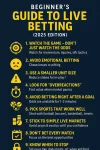
Quick checklist (use it before any in-play bet)
- Am I watching the match, not just the odds screen?
- Can I explain what changed, and why the price is now wrong, in one sentence?
- Is this an overreaction spot, not an emotional response?
- Is my live stake smaller than my pre-match stake?
- Am I avoiding the immediate post-goal rush window?
- If this loses, will I still like the decision tomorrow?
Live betting rewards patience. If you wait for clear overreactions, keep stakes smaller, and stop the moment you feel urgency, you are already ahead of most in-play bettors.
FAQ
Q1: Is live betting harder than pre-match?Yes, because speed increases volatility and makes emotional mistakes more likely. That is why smaller live stakes matter so much.
Q2: What is the safest live approach for beginners?
Focus on simple markets, only when you are watching, and only when you can explain why the price overreacted to what actually changed.
Q3: Should I live bet every day?
Only if you see real value. Being selective is a skill. Constant live action is usually a leak, not an edge.
Next in Beginner Series: Beginner-Friendly Betting Strategies That Actually Work
Previous: How to Choose the Right Bookmaker as a Beginner
Attachments
Last edited:
 Beginner Betting Guides - Reference Menu