

Betting Software (BSO)
Bankroll Crusher
- Joined
- Feb 15, 2022
- Messages
- 108
- Reaction score
- 6
- Points
- 18
You already know that the best betting software loves to explore the weird world of sports, and today we will talk about why Brazil is no longer the country of football.
On the eve of the Qatar World Cup and the title of six-time champion that may fall in the lap of the Brazilian National Team after 20 years, to hear that we are not the country of soccer may be, at least, strange - or revolting. Especially because Brazil is the largest exporter of soccer players in the world, with 1,219 of them playing abroad, according to research done by the International Center for Sport Studies, and also because our national team is the one that has won most World Cups so far.
The idea that Brazil is not the country of soccer came from the mouth of Brazilian sports journalist Juca Kfouri in a June 7, 2010 article for the publication Le Monde Diplomatique. In that issue he cited a DataFolha survey that showed that more people than the Flamengo fans said they did not have a team of their heart, while in Argentina only 7% of respondents claimed not to have a favorite club.
In addition, he criticized that Brazilians don't honor the peripheral games of the championships, only the giants, and hardly do it during the World Cup. Very different from what happens in Europe, where the sport is the star, and in the United States, despite being considered a country where soccer is the weakest.
The democratization of the sport
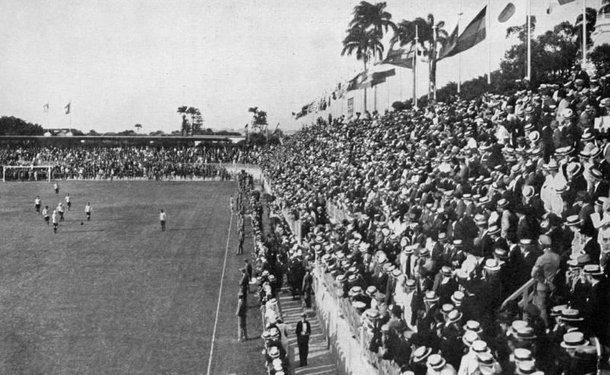
Despite being of British origin, soccer was absorbed into Brazilian culture in such a profound way that it became part of the country's nation branding, alongside carnival, the supposed hospitable instinct, dancing, beaches, and music - totally overshadowing the UK.
The sport arrived in mid-1894 by Charles Miller, considered the "father of Brazilian soccer," who came from Europe with some balls and a primer on the new sport's rules. The sport spread among the white elite, after all, the "inheritance" of slavery prevented blacks from practicing any kind of sport - this introduction would only happen in 1920. And this is what made it popular, mainly as an escapism in vulnerable backgrounds of Brazilian reality, since it is a sport whose means of practice are accessible to all social strata.
It is not known for sure when the nickname "country of soccer" was given to Brazil, although some speculate that it happened after the 1970 World Cup, when we lifted the trophy for the third time. At that time, the soccer played here had already gained international prominence due to the dribbling and unique techniques performed by the players, generating greater rivalry between the national teams, especially the countries in Latin America - the long-standing feud with Argentina.
Beyond the technical characteristics, soccer became a herald for those in peripheral situations, where the true stars that the players became, mostly coming out of poor scenarios in the country, meant a chance for the dream of winning in life, when all the privileges were not in their favor.
Sport was also a tool to ease tensions, alleviate political and economic polarization; narrowing the immense social borders, not only here in Brazil but also in the world, by promoting the connection towards an ideal.
Lack of credibility
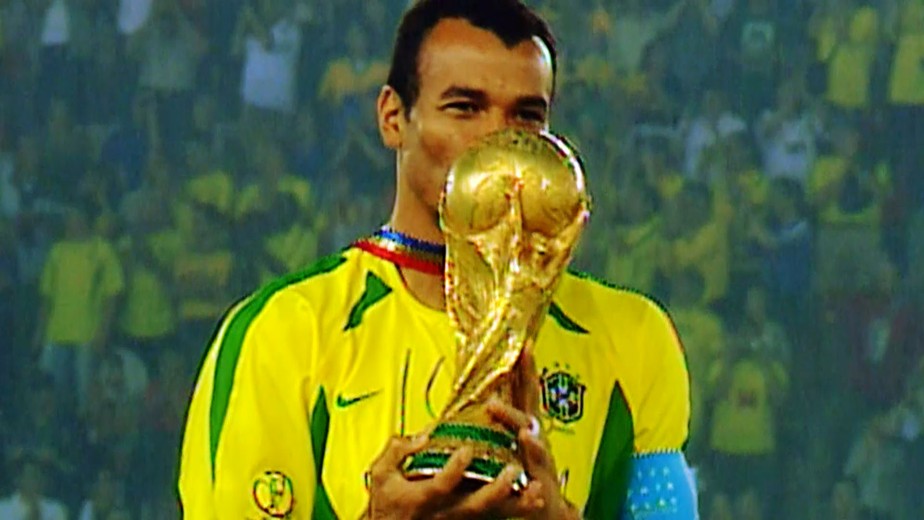
But Kfouri's polemic idea in Diplomatique is not unique. It has already been said through the fingers of Mauro Cezar Pereira, also a sports journalist, in an article for ESPN, in which he reflected on why Brazilian soccer doesn't resonate abroad beyond the performance of its players.
By arguing that the Europeans, with their Champions League, the maximum soccer tournament, move fans and tons of money with their competitions, having repercussions all over the planet, the journalist supports Kfouri's statement that Brazilians only remember soccer during the World Cup - and so on.
"Corinthians has fans, tradition, titles, a sponsor, a stadium, media, and a good soccer team. How was it possible for a club of such caliber to be practically ignored by many European fans and journalists until the victory in the final?", questioned Pereira about the FIFA Club World Cup of 2012, in which the team was champion.
The journalist then emphasized that the soccer played in Brazil is hardly seen abroad and that this needs to be faced by Brazilians, from the top to the stands, so that it is possible to find the problems and think of solutions.
Marcel Capretz, journalist and broadcaster, said that what we do today in terms of soccer, on and off the field, cannot be considered the most excellent on the planet, and that there are many countries doing the sport and everything around it with more quality than we do.
"Our coaches don't go through any minimum training to exercise their function. Our managers are so amateurish that many of those in professional teams are no different from those in the backwoods," Capretz wrote for Soccer University. "Our calendar is a bad joke for 80% of the players in the country. Given this scenario, it is not strange not to win a Cup. Strange was to have won five."
We hope you liked this little piece of history, and if you did, stay tuned because bettingsoftware.com will be back soon with more great content for you!
On the eve of the Qatar World Cup and the title of six-time champion that may fall in the lap of the Brazilian National Team after 20 years, to hear that we are not the country of soccer may be, at least, strange - or revolting. Especially because Brazil is the largest exporter of soccer players in the world, with 1,219 of them playing abroad, according to research done by the International Center for Sport Studies, and also because our national team is the one that has won most World Cups so far.
The idea that Brazil is not the country of soccer came from the mouth of Brazilian sports journalist Juca Kfouri in a June 7, 2010 article for the publication Le Monde Diplomatique. In that issue he cited a DataFolha survey that showed that more people than the Flamengo fans said they did not have a team of their heart, while in Argentina only 7% of respondents claimed not to have a favorite club.
In addition, he criticized that Brazilians don't honor the peripheral games of the championships, only the giants, and hardly do it during the World Cup. Very different from what happens in Europe, where the sport is the star, and in the United States, despite being considered a country where soccer is the weakest.
The democratization of the sport
Despite being of British origin, soccer was absorbed into Brazilian culture in such a profound way that it became part of the country's nation branding, alongside carnival, the supposed hospitable instinct, dancing, beaches, and music - totally overshadowing the UK.
The sport arrived in mid-1894 by Charles Miller, considered the "father of Brazilian soccer," who came from Europe with some balls and a primer on the new sport's rules. The sport spread among the white elite, after all, the "inheritance" of slavery prevented blacks from practicing any kind of sport - this introduction would only happen in 1920. And this is what made it popular, mainly as an escapism in vulnerable backgrounds of Brazilian reality, since it is a sport whose means of practice are accessible to all social strata.
It is not known for sure when the nickname "country of soccer" was given to Brazil, although some speculate that it happened after the 1970 World Cup, when we lifted the trophy for the third time. At that time, the soccer played here had already gained international prominence due to the dribbling and unique techniques performed by the players, generating greater rivalry between the national teams, especially the countries in Latin America - the long-standing feud with Argentina.
Beyond the technical characteristics, soccer became a herald for those in peripheral situations, where the true stars that the players became, mostly coming out of poor scenarios in the country, meant a chance for the dream of winning in life, when all the privileges were not in their favor.
Sport was also a tool to ease tensions, alleviate political and economic polarization; narrowing the immense social borders, not only here in Brazil but also in the world, by promoting the connection towards an ideal.
Lack of credibility
But Kfouri's polemic idea in Diplomatique is not unique. It has already been said through the fingers of Mauro Cezar Pereira, also a sports journalist, in an article for ESPN, in which he reflected on why Brazilian soccer doesn't resonate abroad beyond the performance of its players.
By arguing that the Europeans, with their Champions League, the maximum soccer tournament, move fans and tons of money with their competitions, having repercussions all over the planet, the journalist supports Kfouri's statement that Brazilians only remember soccer during the World Cup - and so on.
"Corinthians has fans, tradition, titles, a sponsor, a stadium, media, and a good soccer team. How was it possible for a club of such caliber to be practically ignored by many European fans and journalists until the victory in the final?", questioned Pereira about the FIFA Club World Cup of 2012, in which the team was champion.
The journalist then emphasized that the soccer played in Brazil is hardly seen abroad and that this needs to be faced by Brazilians, from the top to the stands, so that it is possible to find the problems and think of solutions.
Marcel Capretz, journalist and broadcaster, said that what we do today in terms of soccer, on and off the field, cannot be considered the most excellent on the planet, and that there are many countries doing the sport and everything around it with more quality than we do.
"Our coaches don't go through any minimum training to exercise their function. Our managers are so amateurish that many of those in professional teams are no different from those in the backwoods," Capretz wrote for Soccer University. "Our calendar is a bad joke for 80% of the players in the country. Given this scenario, it is not strange not to win a Cup. Strange was to have won five."
We hope you liked this little piece of history, and if you did, stay tuned because bettingsoftware.com will be back soon with more great content for you!



