Betting Software (BSO)
Bankroll Crusher
- Joined
- Feb 15, 2022
- Messages
- 108
- Reaction score
- 6
- Points
- 18
Chess may not be the most popular sport in the world, but it has a strong base of followers, and today the best betting software will take a short look at the famous and infamous Deep Blue.
The Roots

Legend says that chess emerged in the middle of 200 B.C., when the Chinese commander Hán Xin invented it as a way to represent an important battle in Chinese history. After that, the game was forgotten and only resurfaced in the 7th century under new rules, becoming popular with the nickname XiangQi, which means "elephant game".
Chess spread throughout Asia and Europe over the next centuries, evolving into what we know today around the 16th century, with one of the first chess masters being the Spanish priest Ruy López de Segura. In his honor, the move "opening Ruy López" was created and became the most famous of the game.
In the history of chess, the longest confirmed unbeaten streak was that of Russian Garry Kasparov, whose 15-year unbeaten streak was interrupted when he lost to Deep Blue, the first computer to win at chess.
Hsu's invention
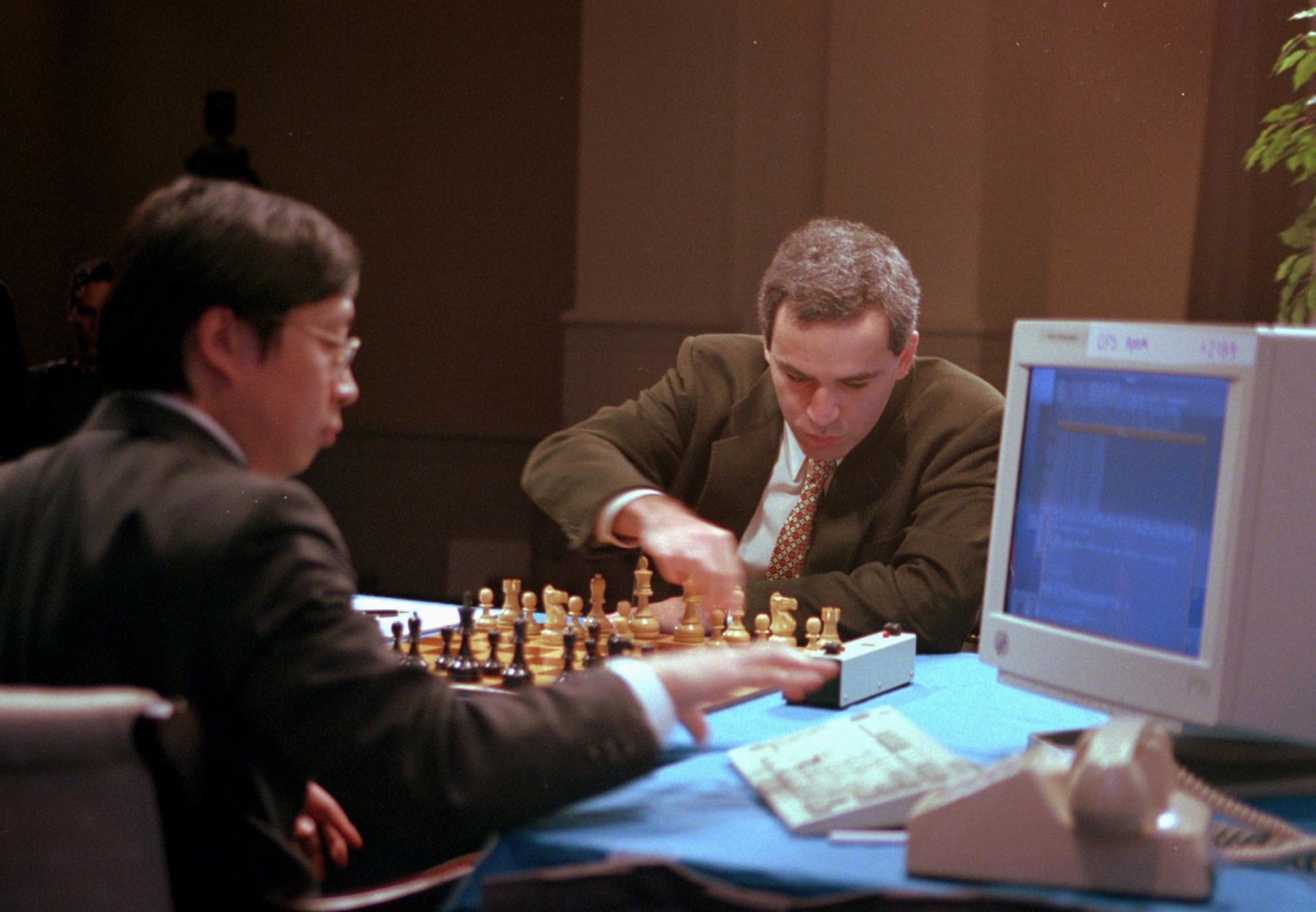
Aiming to improve and challenge the abilities of the human mind and the extent of technology, a committee at Carnegie Mellon University proposed a $100,000 prize in 1980 to anyone who could create a computer capable of beating the best chess player in the world.
Within 5 years, computer scientist Feng-hsiung Hsu had created ChipTest, a computer that didn't perform very well but served as the basis for his Deep Thought, an improved version that brought Hsu and his team international fame by winning the North American Computer Chess Championship in 1988 and the World Computer Chess Championship the following year.
Hsu's computer could analyze and interpret thousands of games played by chess players, with an opening book containing more than 4,000 positions and a history of 700,000 games played by grandmasters. However, even the information contained in it could not match the mind and performance of Garry Kasparov, who defeated him in a tournament in 1989.
Deep Thought was retired by IBM shortly afterwards for updates, reappearing on the chess scene in 1996 as Deep Blue, with its creator certain that this version was ready to defeat the unbeatable Kasparov.
A Critical Error
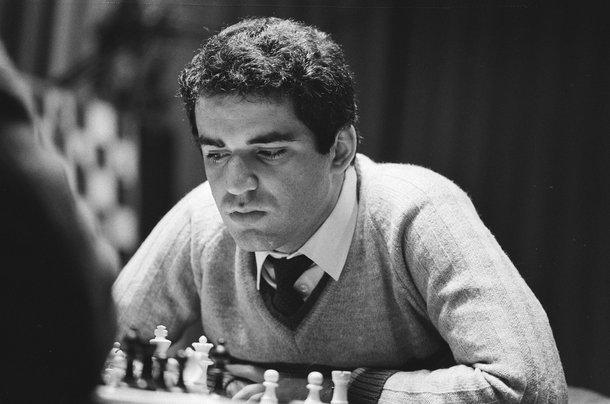
Considered a kind of chess rock star, the Russian, who started training at the age of 10 and became the youngest player to occupy the first place in the world ranking 11 years later, was beaten by Deep Blue during a 6-game tournament, which took place between February 10 and 17, 1996, and ended in a draw.
This, however, was still not enough for Hsu and his team to take home the prize from Carnegie Mellon, because the computer needed to win. After a few more updates, on May 11, 1997, Deep Blue finally managed to defeat Kasparov, who made a serious mistake in confusing the computer's introductory defense moves.
The Russian even asked for a rematch, but IBM refused. Nevertheless, the grandmaster reported to Wired in 2020 that he had made peace with Deep Blue and was grateful that the machine had expanded the public's interest in chess.
The computer was dismantled by IBM and its parts are on display at the National Museum of American History and the Computer History Museum.
We hope you liked this little piece about a weird story in the world of sports, and if you did, stay tuned because bettingsoftware.com will be back soon with more great content for you!
The Roots
Legend says that chess emerged in the middle of 200 B.C., when the Chinese commander Hán Xin invented it as a way to represent an important battle in Chinese history. After that, the game was forgotten and only resurfaced in the 7th century under new rules, becoming popular with the nickname XiangQi, which means "elephant game".
Chess spread throughout Asia and Europe over the next centuries, evolving into what we know today around the 16th century, with one of the first chess masters being the Spanish priest Ruy López de Segura. In his honor, the move "opening Ruy López" was created and became the most famous of the game.
In the history of chess, the longest confirmed unbeaten streak was that of Russian Garry Kasparov, whose 15-year unbeaten streak was interrupted when he lost to Deep Blue, the first computer to win at chess.
Hsu's invention
Aiming to improve and challenge the abilities of the human mind and the extent of technology, a committee at Carnegie Mellon University proposed a $100,000 prize in 1980 to anyone who could create a computer capable of beating the best chess player in the world.
Within 5 years, computer scientist Feng-hsiung Hsu had created ChipTest, a computer that didn't perform very well but served as the basis for his Deep Thought, an improved version that brought Hsu and his team international fame by winning the North American Computer Chess Championship in 1988 and the World Computer Chess Championship the following year.
Hsu's computer could analyze and interpret thousands of games played by chess players, with an opening book containing more than 4,000 positions and a history of 700,000 games played by grandmasters. However, even the information contained in it could not match the mind and performance of Garry Kasparov, who defeated him in a tournament in 1989.
Deep Thought was retired by IBM shortly afterwards for updates, reappearing on the chess scene in 1996 as Deep Blue, with its creator certain that this version was ready to defeat the unbeatable Kasparov.
A Critical Error
Considered a kind of chess rock star, the Russian, who started training at the age of 10 and became the youngest player to occupy the first place in the world ranking 11 years later, was beaten by Deep Blue during a 6-game tournament, which took place between February 10 and 17, 1996, and ended in a draw.
This, however, was still not enough for Hsu and his team to take home the prize from Carnegie Mellon, because the computer needed to win. After a few more updates, on May 11, 1997, Deep Blue finally managed to defeat Kasparov, who made a serious mistake in confusing the computer's introductory defense moves.
The Russian even asked for a rematch, but IBM refused. Nevertheless, the grandmaster reported to Wired in 2020 that he had made peace with Deep Blue and was grateful that the machine had expanded the public's interest in chess.
The computer was dismantled by IBM and its parts are on display at the National Museum of American History and the Computer History Museum.
We hope you liked this little piece about a weird story in the world of sports, and if you did, stay tuned because bettingsoftware.com will be back soon with more great content for you!